
Find Out More About a
stair chair lift for your home.
And check out our
stairlift reviewBuying a stair lift chair can be a complicated and emotionally-wrought task. This article will help make light of the matter by introducing three important topics for those new to the subject: I. Dealing with a local company; II. Types of stairlifts; and III. Power sources.
To use or not use a local company is an important decision. Local companies might know of some local funding sources that could take care of part of all of the price. Also, an in-home visit is very likely, and in general the service will be more personalized. Lastly, local companies have the best grasp of recycled equipment that might be available. (Note that the demand for used stair lifts is fairly high.) Non-local companies, on the contrary, might have more connections to financial institutions and might be able to offer financing. As well, the unit will be less expensive if it is not sold via a reseller.
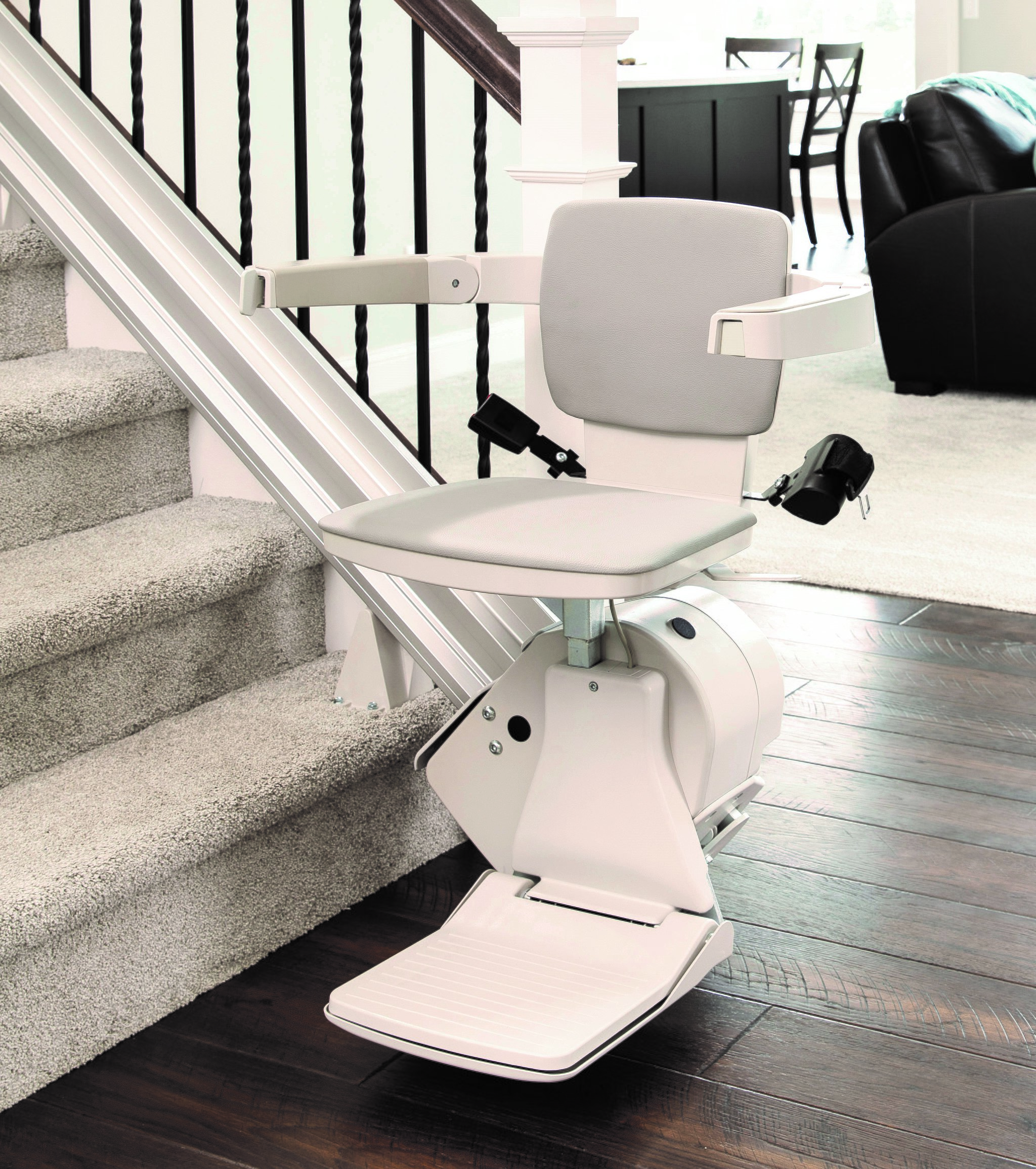
You may doubt the sufficiency of space in your home for the equipment, or wonder whether equipment exists that can meet your specific stair configuration. There are several different options to choose from when purchasing a stair lift chair lift. For straight staircases with ample space, a straight stair stair lift is appropriate. If you have this situation, you are in luck, because these devices (a) are the least expensive, (b) have the greatest installation flexibility, and (c) count for the greatest proportion of models on the market. An added bonus is that if you are particularly price-sensitive, some of these models can be assembled and installed by the customer. For example, the Acorn stair lift chair is a good choice for straight staircases.
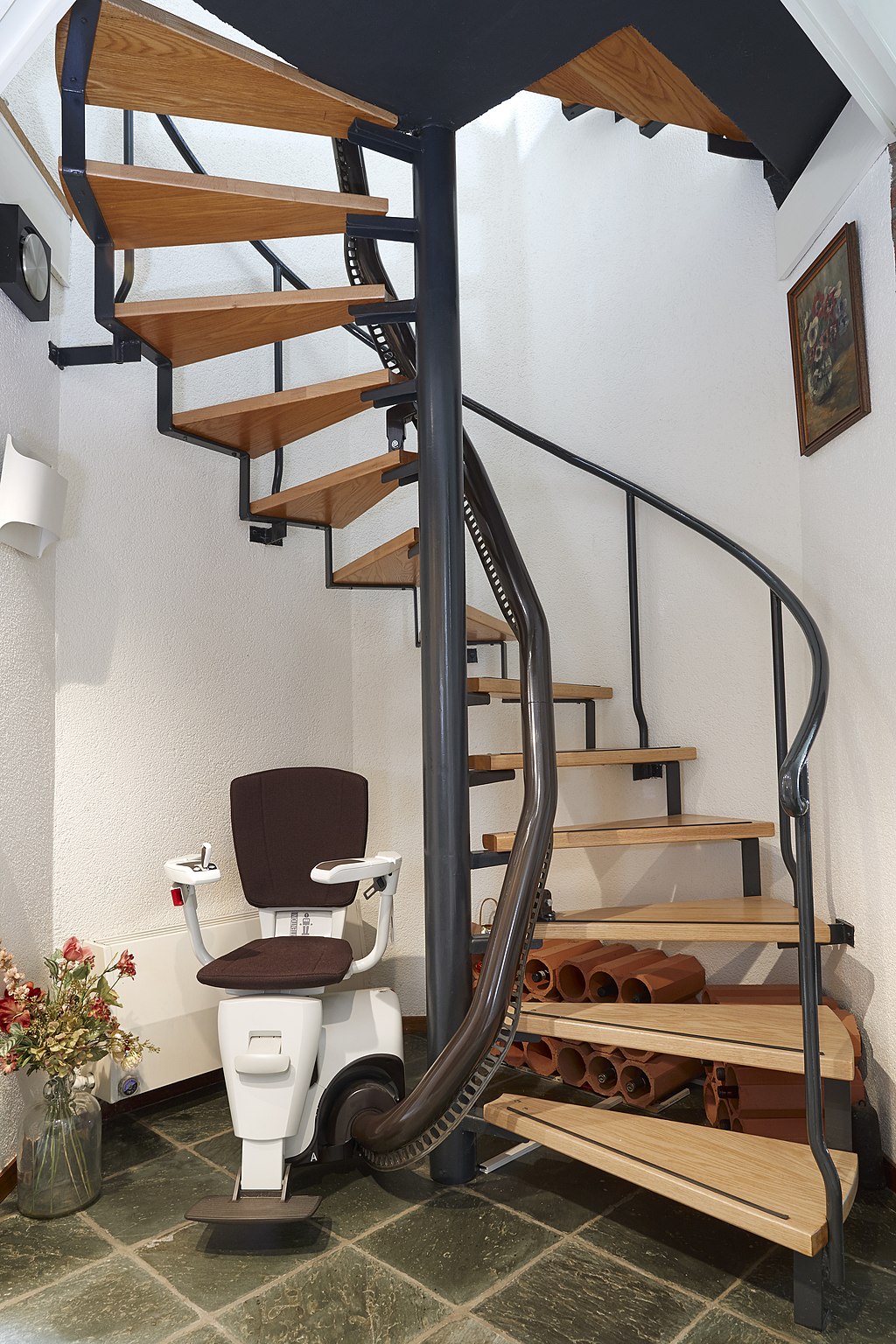
On the other hand, if your staircase is curved, or there are other complications, you will need a curved stair chair lift. This device needs to be custom installed, and therefore will be a lot more expensive. Up to 50% of the cost can be paid from the fee of a custom assessment and installation. Furthermore, the mechanism for a curved stair chair lift is more sophisticated, and therefore, too, more expensive. Finally, for situations where there is not a lot of space, a perch stair lift would be necessary, which is a platform stair lift on which the rider would stand or "perch" while ascending or descending the staircase.
Stair lifts can draw their power in one of two ways: They can either be directly connected to the house's power, or use a battery pack. The former type of device is less expensive, and can be made to look smaller and more elegant, since the need is obviated for storing a battery pack. However, in the event of a power outage, it will no longer be able to carry the rider up. Not to worry, even a powerless device is made to gently glide back to its landing station at the base of the stairs. The latter type, a battery powered stair lift chair, is more expensive, because of (a) the initial cost of the battery and (b) the cost of replacement batteries years down the road. Of course, it will continue to function in the event of a power failure. If the rider's mobility impairment is not very severe, that he or she may still be able to ascend the stairs without the use of the lift, then a directly-powered unit would suffice.
I hope that by having touched on these three points, you're a bit more comfortable in this new subject. The first and most important decision is whether to go local or global; then, what kind of power source do you need? You also are now aware of the three basic types of stair lifts.
For more information about stair lift chair manufacturers, go to the Stair Lift Chair site; and for prices information, stairlifts prices is a good reference.
Be Sure to Bookmark the Page so Others Can Enjoy:
Solve your home mobility issues with a
handicap stair lift.